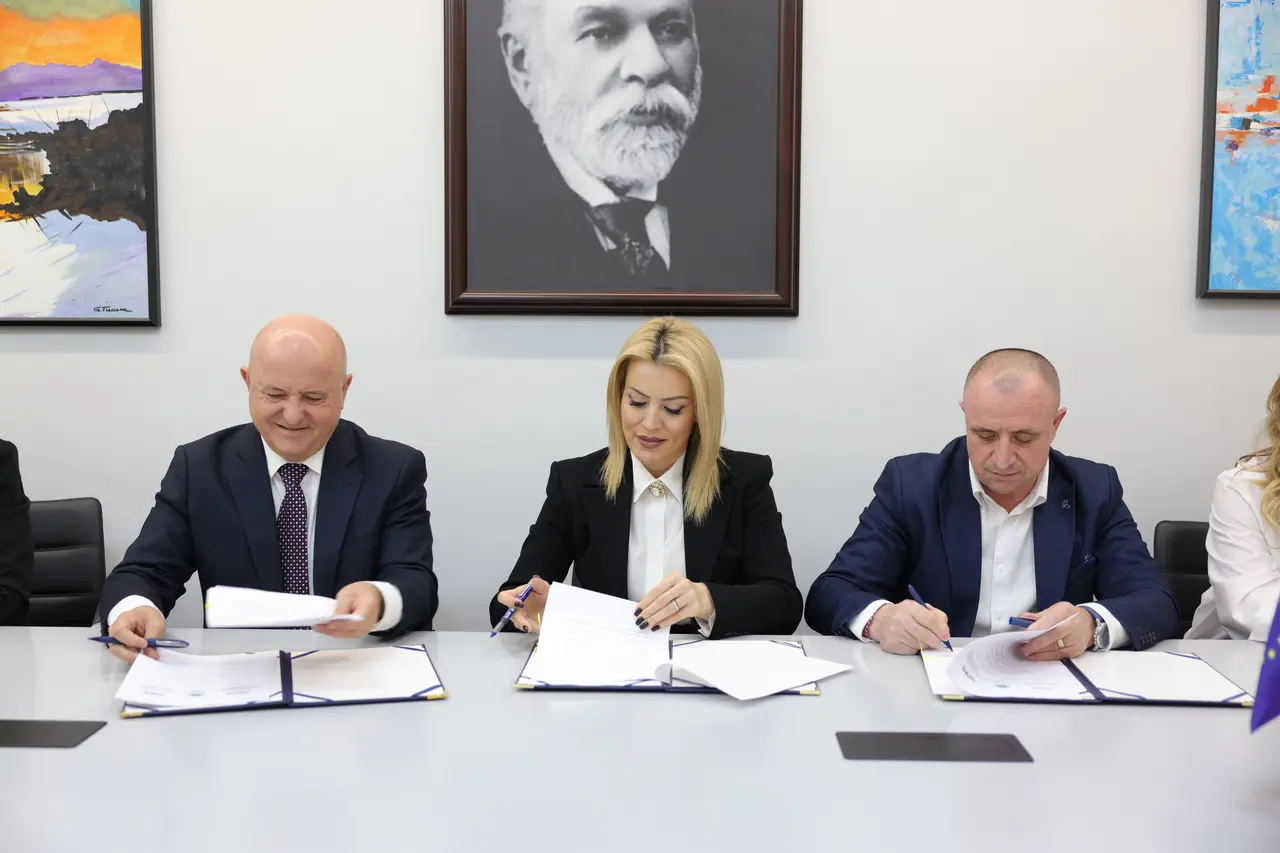
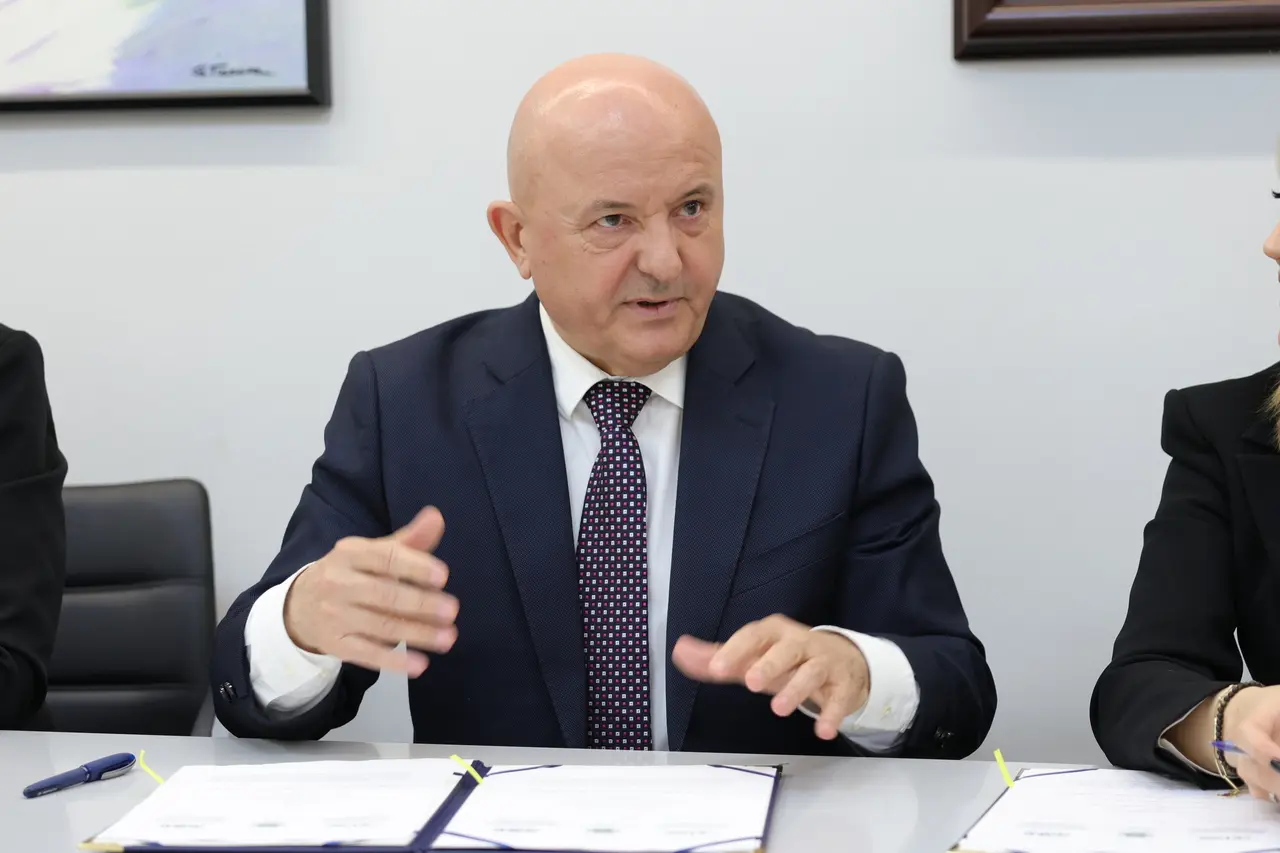
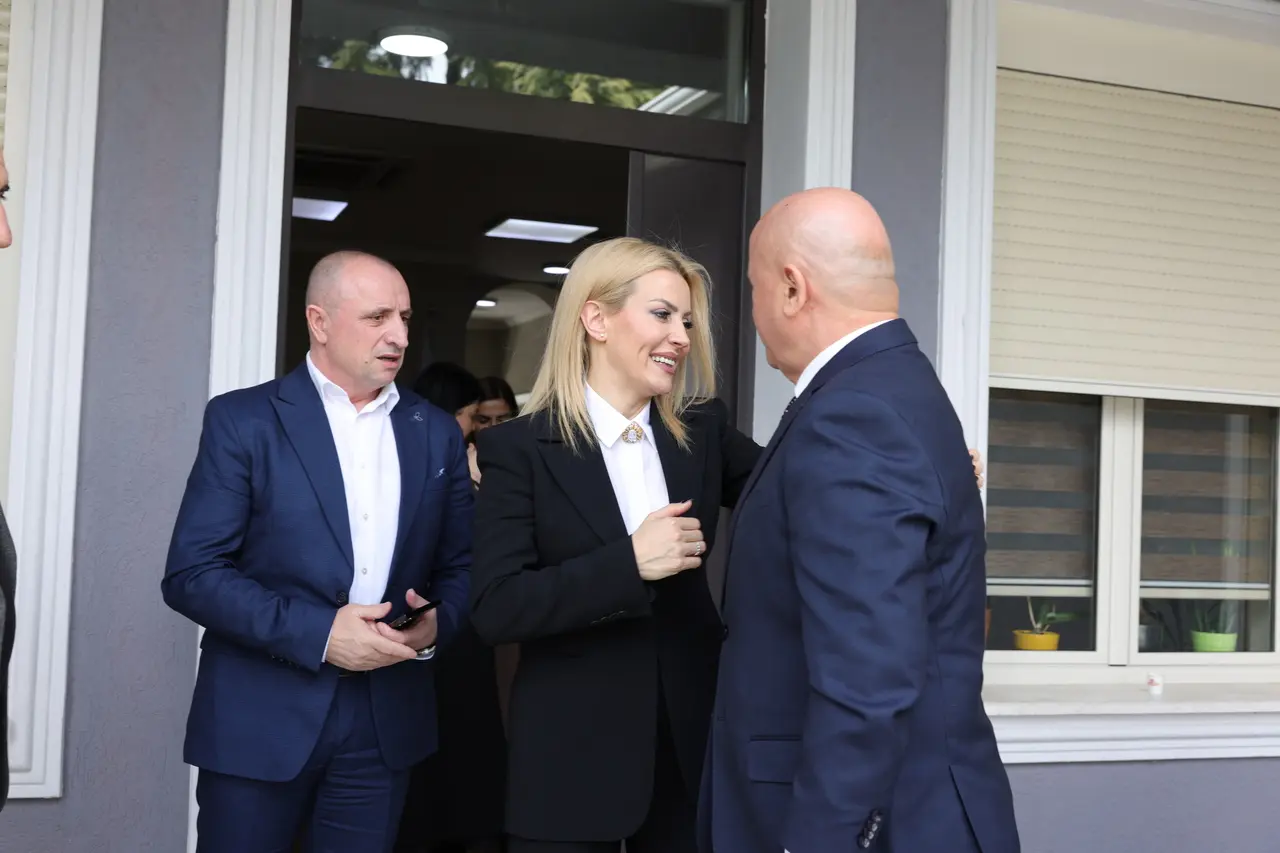
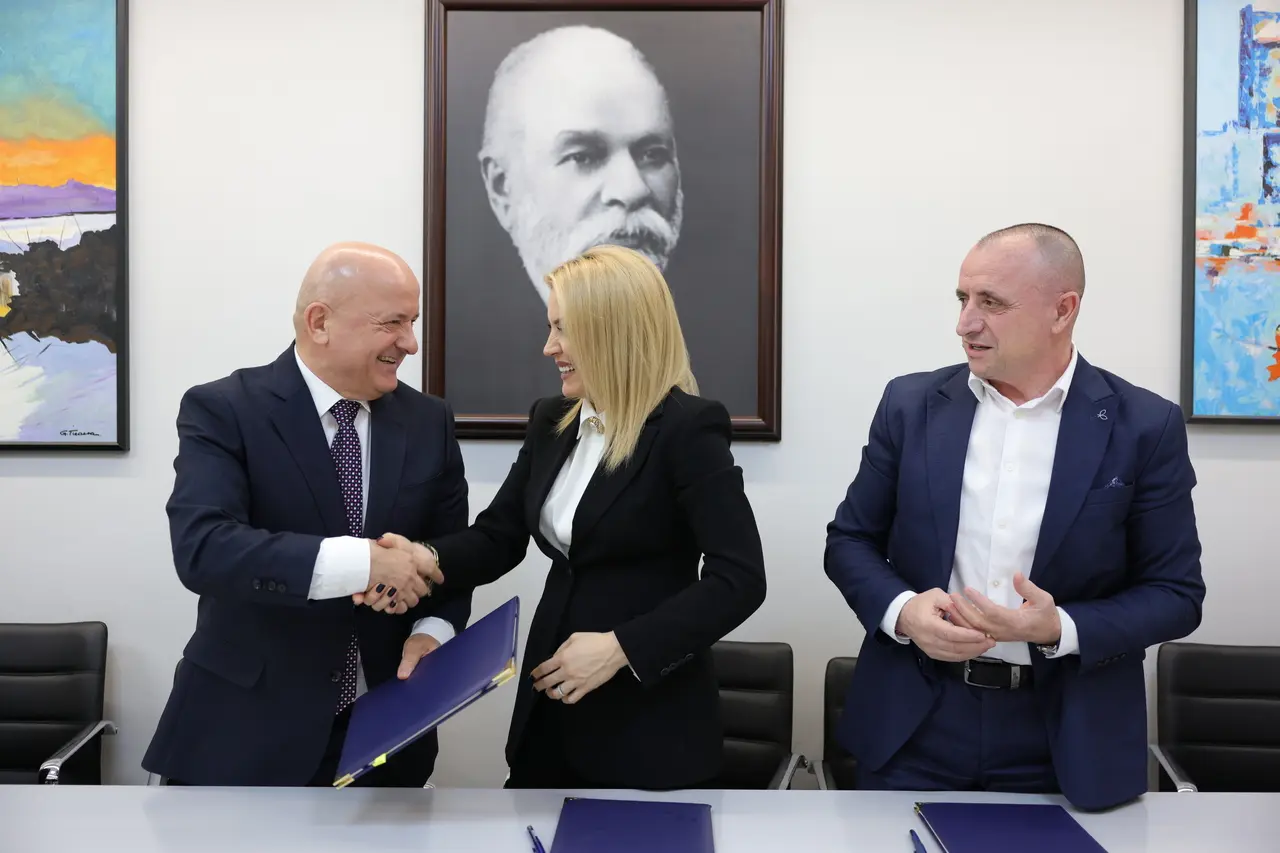
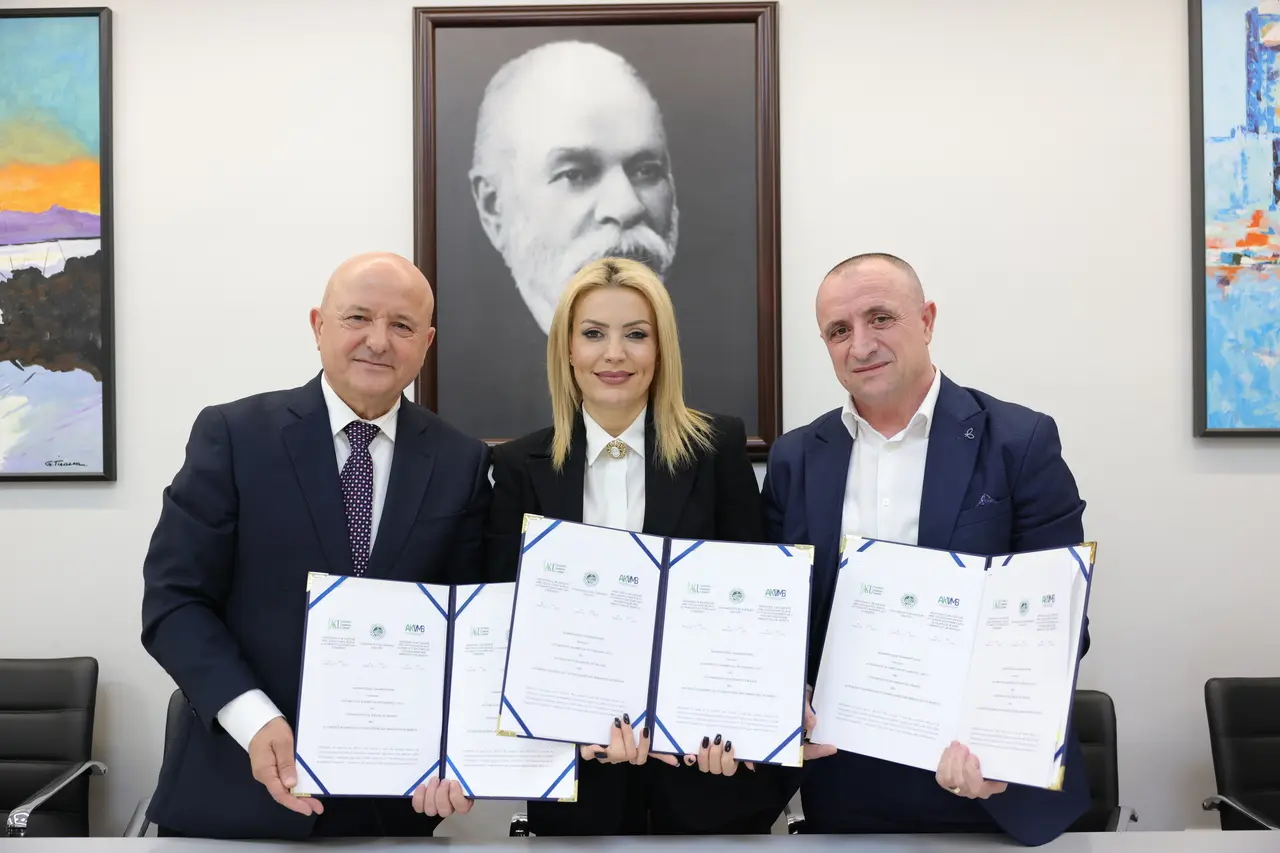
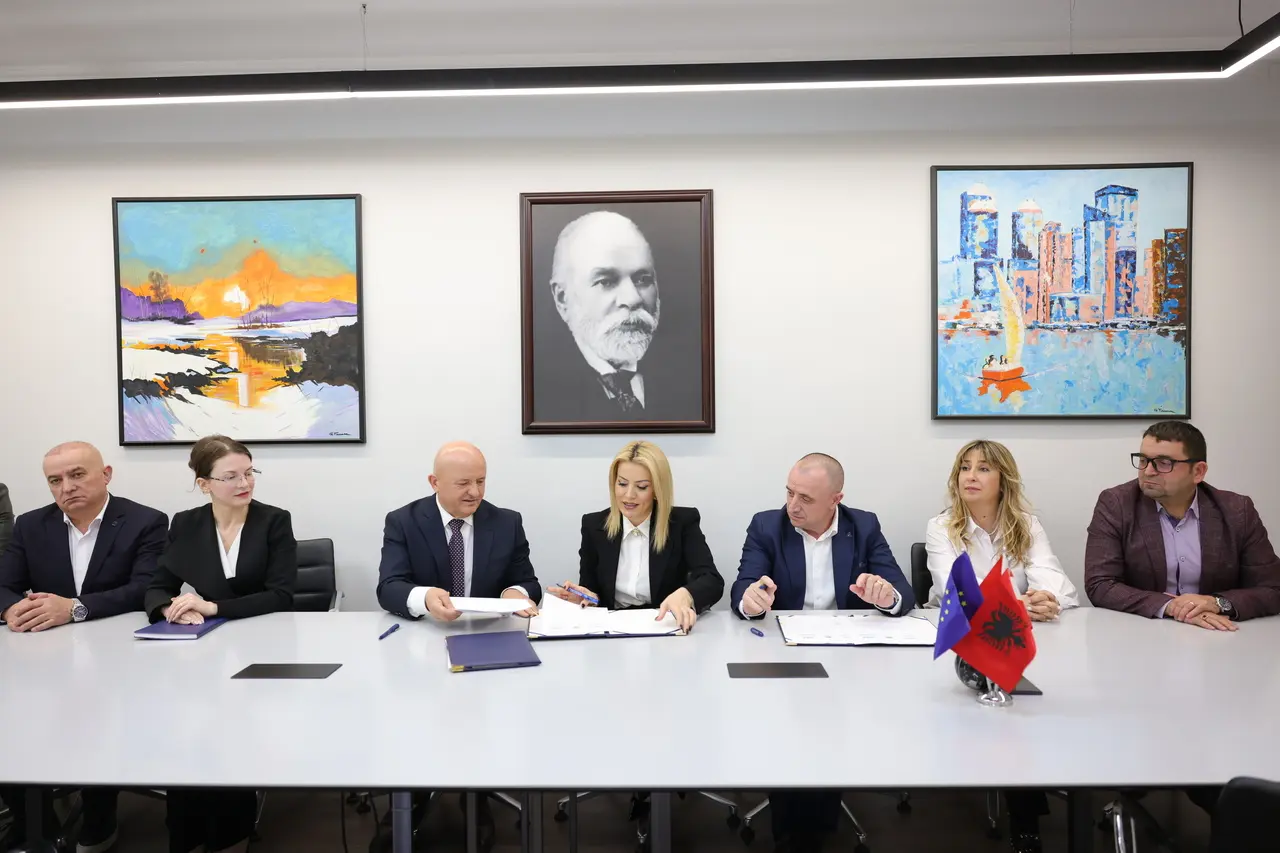
It was a pleasure to welcome today at AUT the Director of the National Food Authority, Ms. Blerina Gjylameti, and the Director of the National Veterinary and Plant Protection Authority, Mr. Roland Meçaj, with whom we formalized the signing of the agreement between our three institutions, in a clear, constructive spirit of cooperation focused on achieving concrete results.
This meeting marked more than a formal act; it represents a carefully considered step toward building a functional partnership between the Agricultural University of Tirana and the country’s key food safety institutions. This cooperation establishes a new inter-institutional model, where UBT’s academic and research expertise is naturally integrated with the regulatory and monitoring role of state institutions, aiming to meet European Union standards and enhance the quality of services in support of public health.
Particular attention was given to one of the most critical current challenges, namely the lack of qualified human resources in technical fields such as agronomy, veterinary medicine, phytosanitary control, and plant protection. In this context, the agreement does not treat this gap as a simple administrative or short-term issue, but as a real opportunity for structural reform, through the establishment of a new meritocratic and progressive system for the development of young professionals. In this framework, a key element of the cooperation is the establishment of a direct communication bridge between the two Agencies and the Agricultural University of Tirana, through continuous information-sharing with UBT on current and projected vacancies within the respective state structures. This mechanism aims to create a sustainable alignment between the needs of the public administration and the academic offer.
At the same time, the agreement prioritizes the inclusion of AUT graduates in these positions by reserving dedicated quotas for key profiles such as agronomy, plant protection, veterinary medicine, food technology, and animal science. These quotas will remain open until they are filled with qualified candidates from AUT, in accordance with the applicable legislation on civil service and the labor market. This approach translates into structured training and specialization programs, where graduates will undergo a well-organized process that includes institutional foundational training, thematic professional training, and intensive practical engagement, accompanied by continuous performance evaluation. The objective is clear: to create a new generation of public professionals equipped with technical competencies, analytical skills, and a European institutional culture.
Within this agreement, it was established that the inclusion of graduates will be treated not as a conventional recruitment procedure, but as a structured professional development program, recognizing them as strategic capital for the future of the sector. This approach aims to go beyond simply filling vacancies, by creating a new generation of public professionals equipped with technical skills, analytical competencies, and a European institutional culture. Similar to the European Union’s “fast-track” models, it seeks to build a professional administration grounded in meritocracy and the sustainable development of human capacities. At the same time, our cooperation will be materialized through joint activities such as conducting laboratory analyses, real-time information exchange, organizing joint inspections, and developing research and academic projects. This integration of academic capacity with institutional experience creates a sustainable mechanism that links education with practice and public policy. The shared commitment to removing barriers, strengthening cooperation progressively, and building lasting capacities reflects a common vision for the country’s economic, social, and institutional development.
This agreement represents a significant milestone that clearly confirms the new stage at which the Agricultural University of Tirana stands, as an open, proactive institution oriented toward its natural role in shaping agricultural and development policies in the country.
It reflects a clear shift in AUT's approach, from a traditional academic role toward becoming a key actor that directly contributes with expertise, scientific research, and human capital to decision-making and the fulfillment of national priorities. In this context, AUT positions itself as a strategic partner of public institutions, building sustainable bridges of cooperation in support of the development of the agricultural sector and the protection of the public interest.