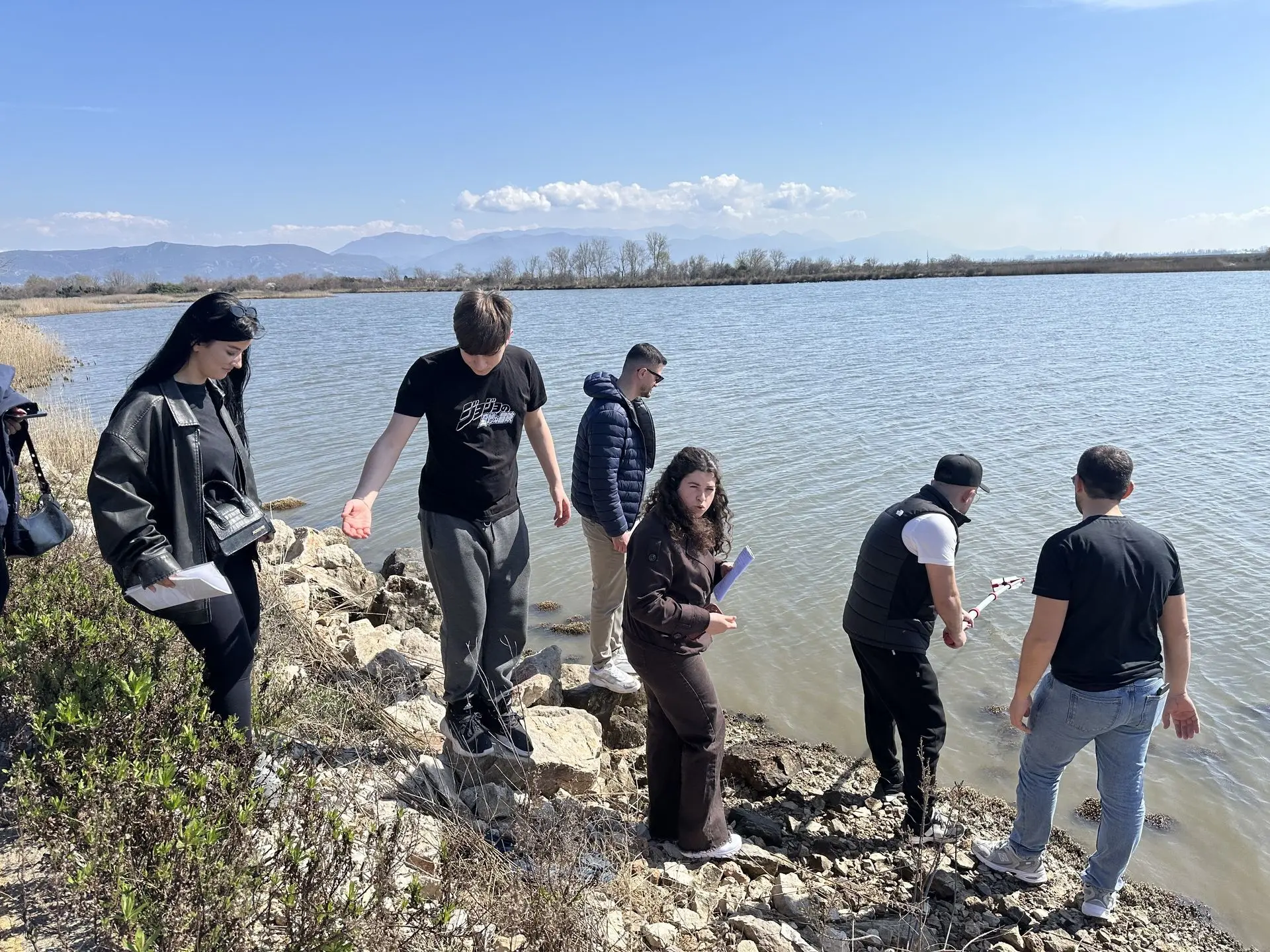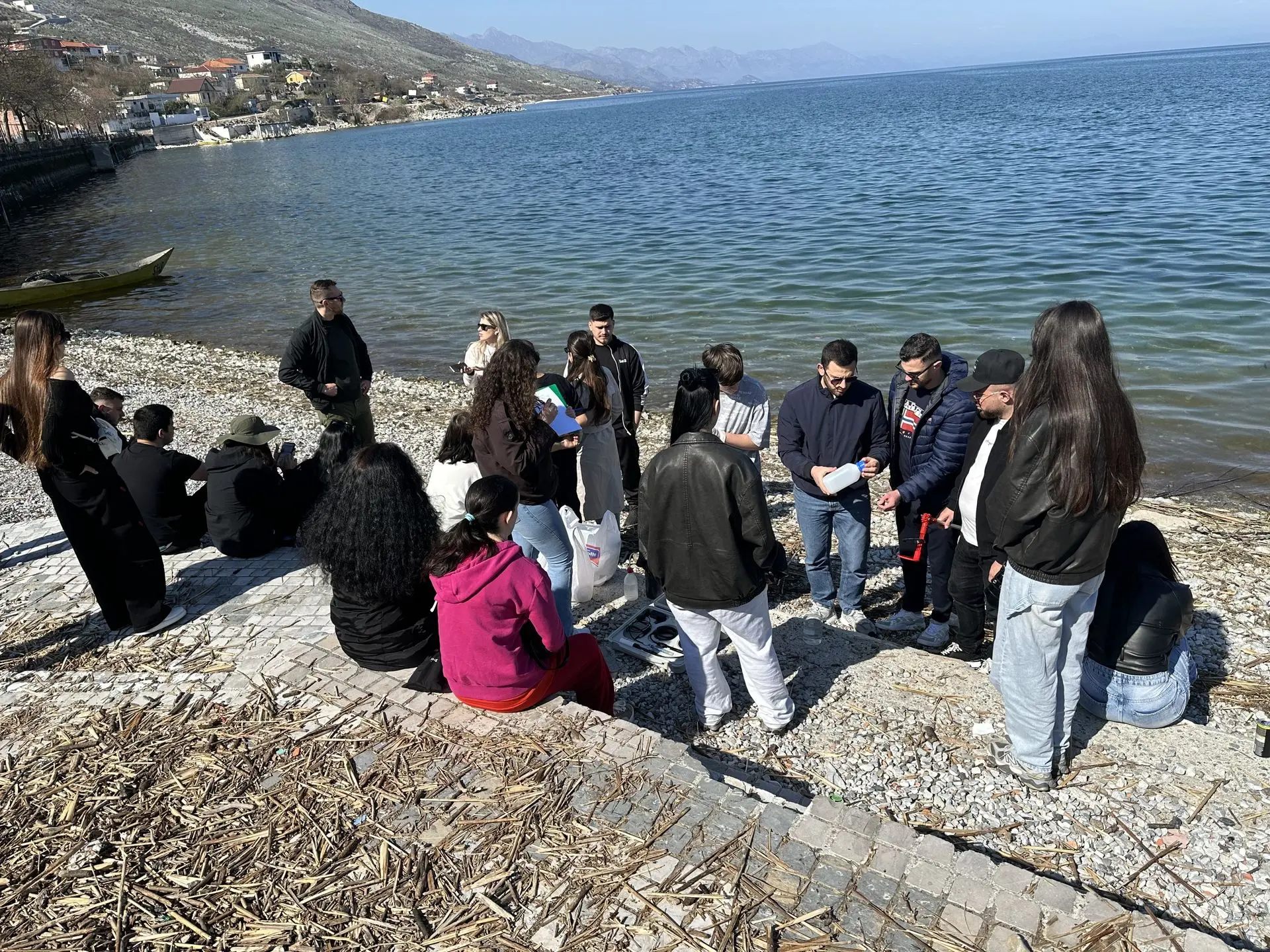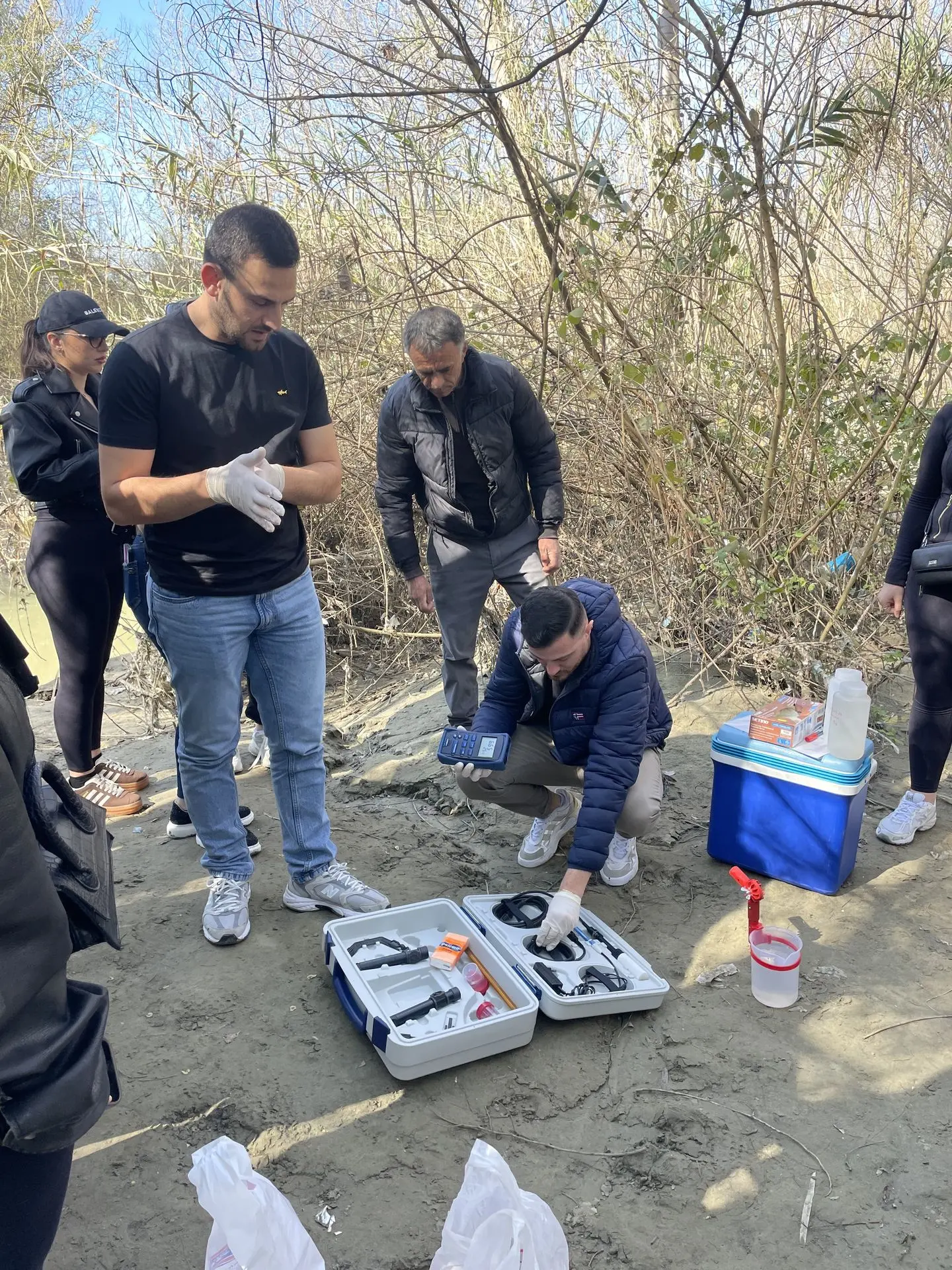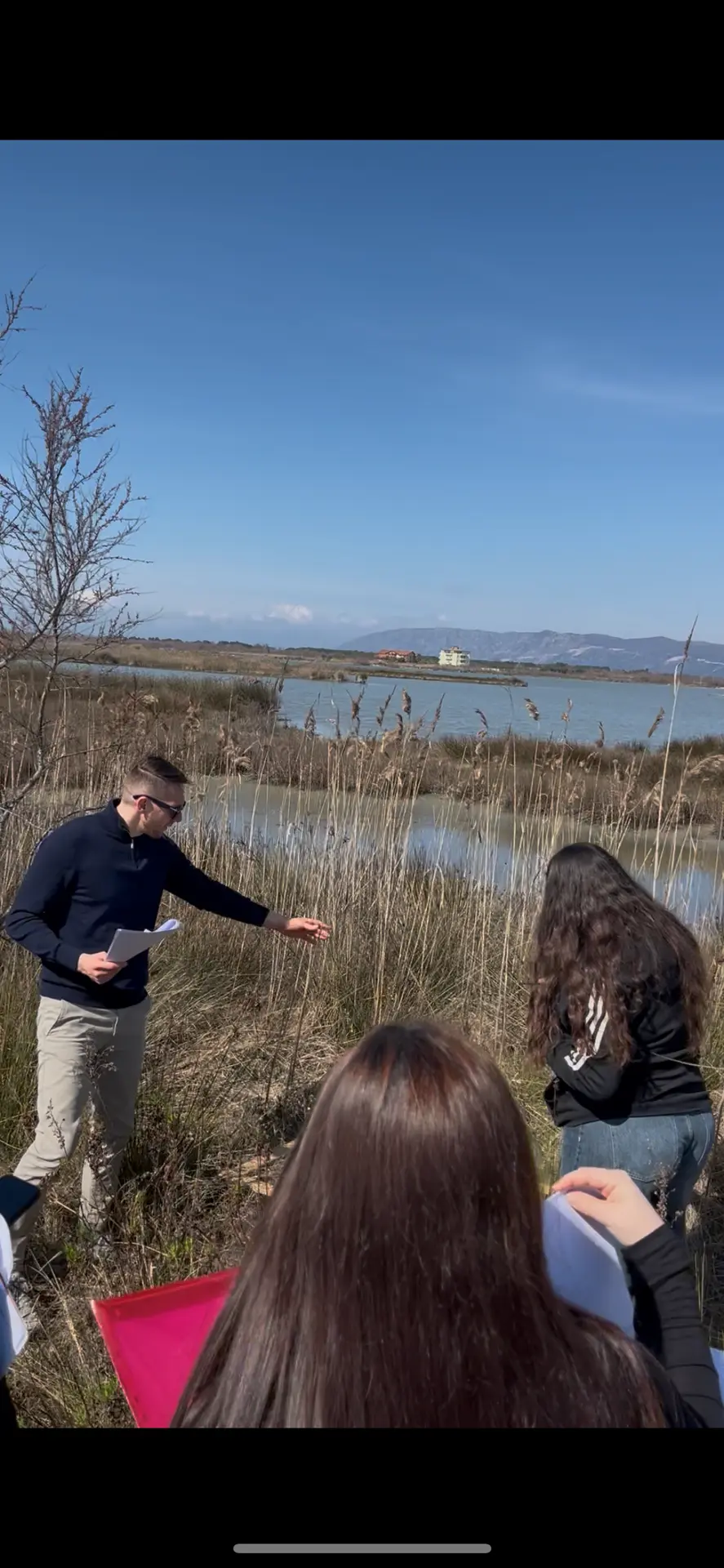
Third-year students from the “Agro-Environmental Engineering” and “Natural Resource Management” programs carried out their first field practice, focused on three main areas of environmental importance: the Ishëm River Basin, the Kune-Vain protected area, and Lake Shkodra.
This practice aims to integrate theoretical knowledge with practical field application, while developing students’ research and analytical skills, in accordance with the objectives of the interdisciplinary module.
I. Ishëm River Basin – Monitoring and assessment of water quality and soil pollution
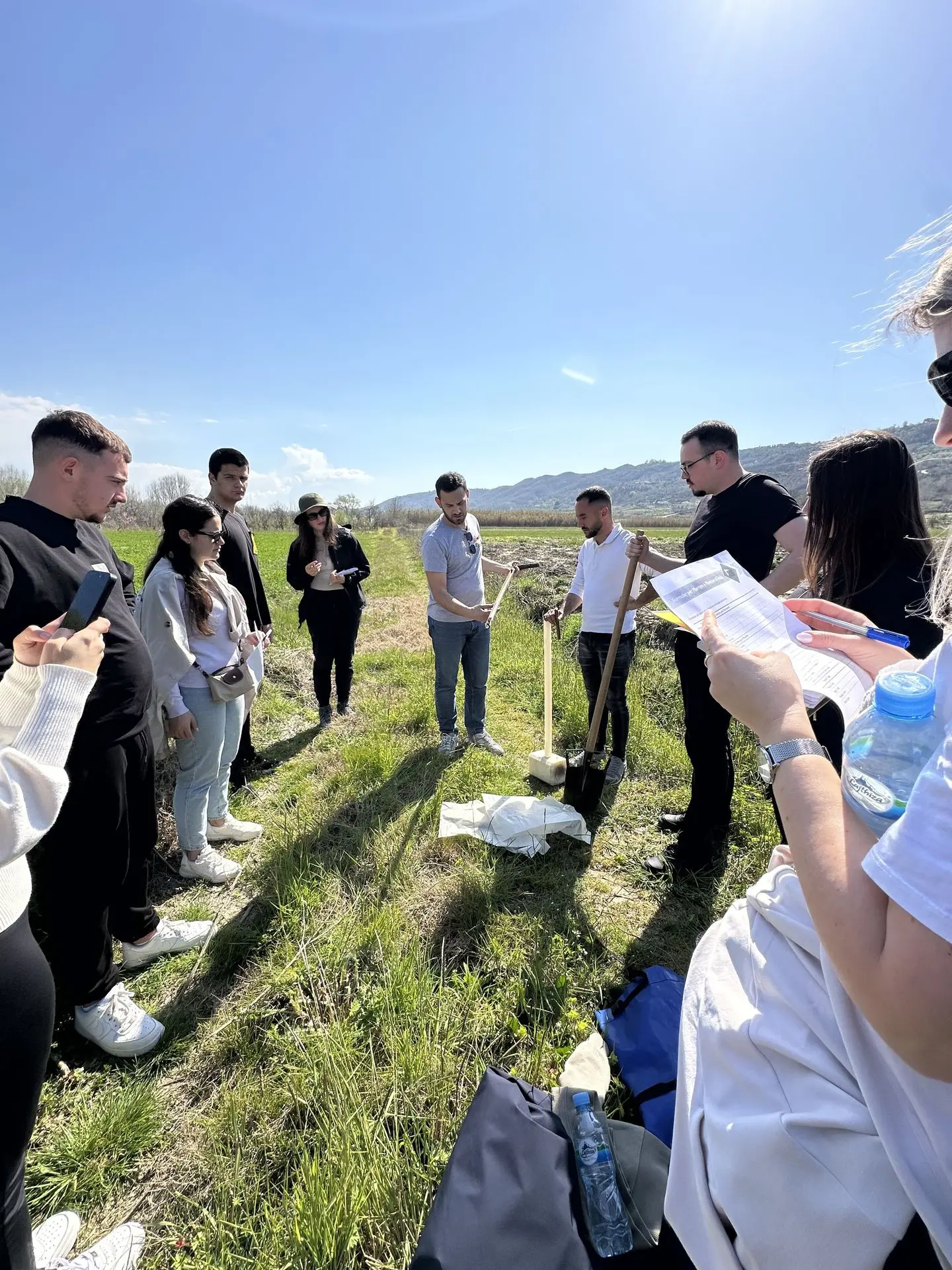
The first stop took place near the automatic water monitoring station, where students were introduced to the system’s operation and its importance for real-time water quality monitoring. In this area, field measurements of key parameters (pH, electrical conductivity – EC, and dissolved oxygen – DO) were carried out, and water samples were collected for laboratory analysis. Additionally, soil sampling was conducted to assess the impact of flooding and the transport of pollutants toward agricultural lands.
II. Kune-Vain – Assessment of biodiversity and environmental pressures
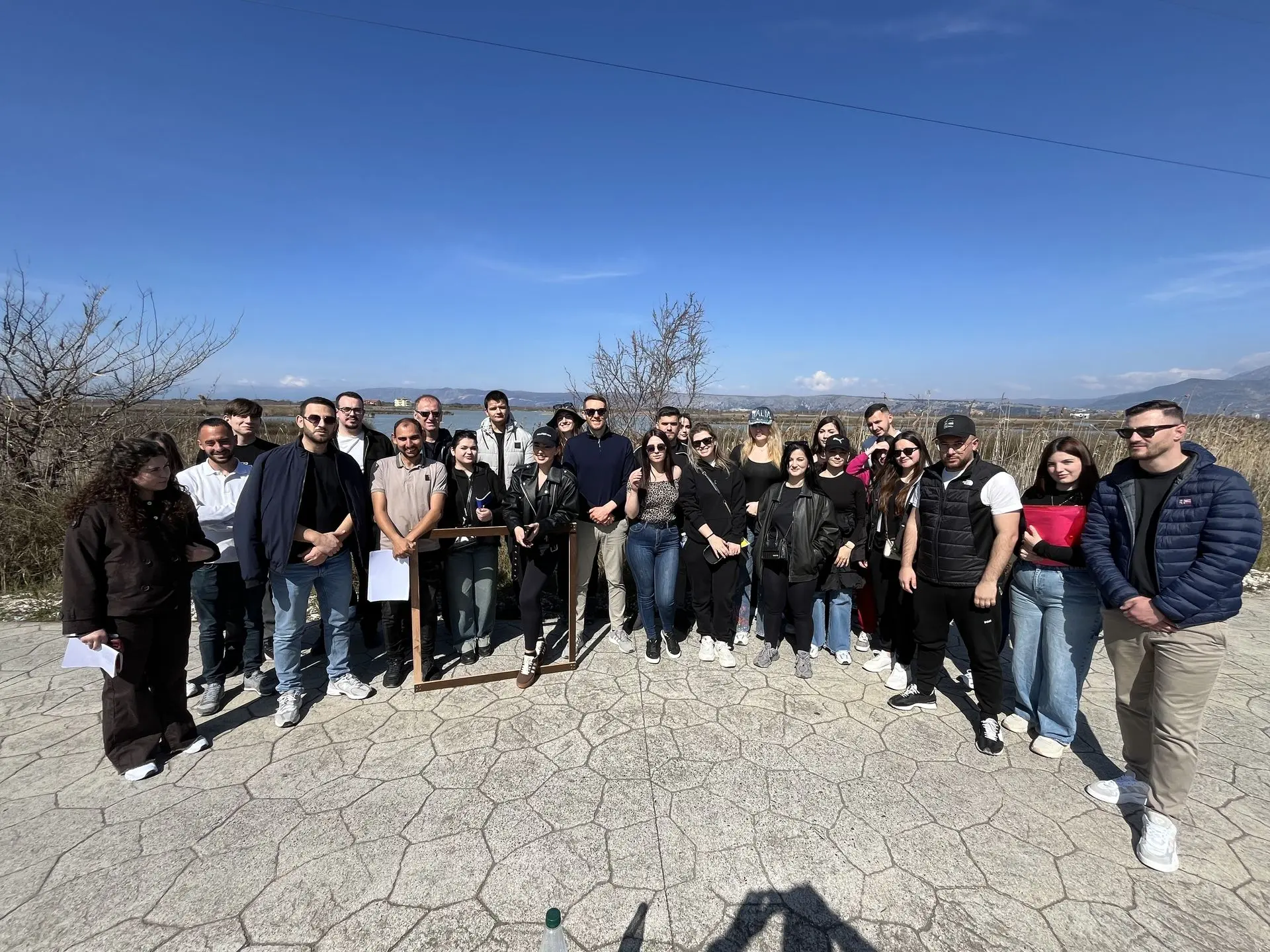
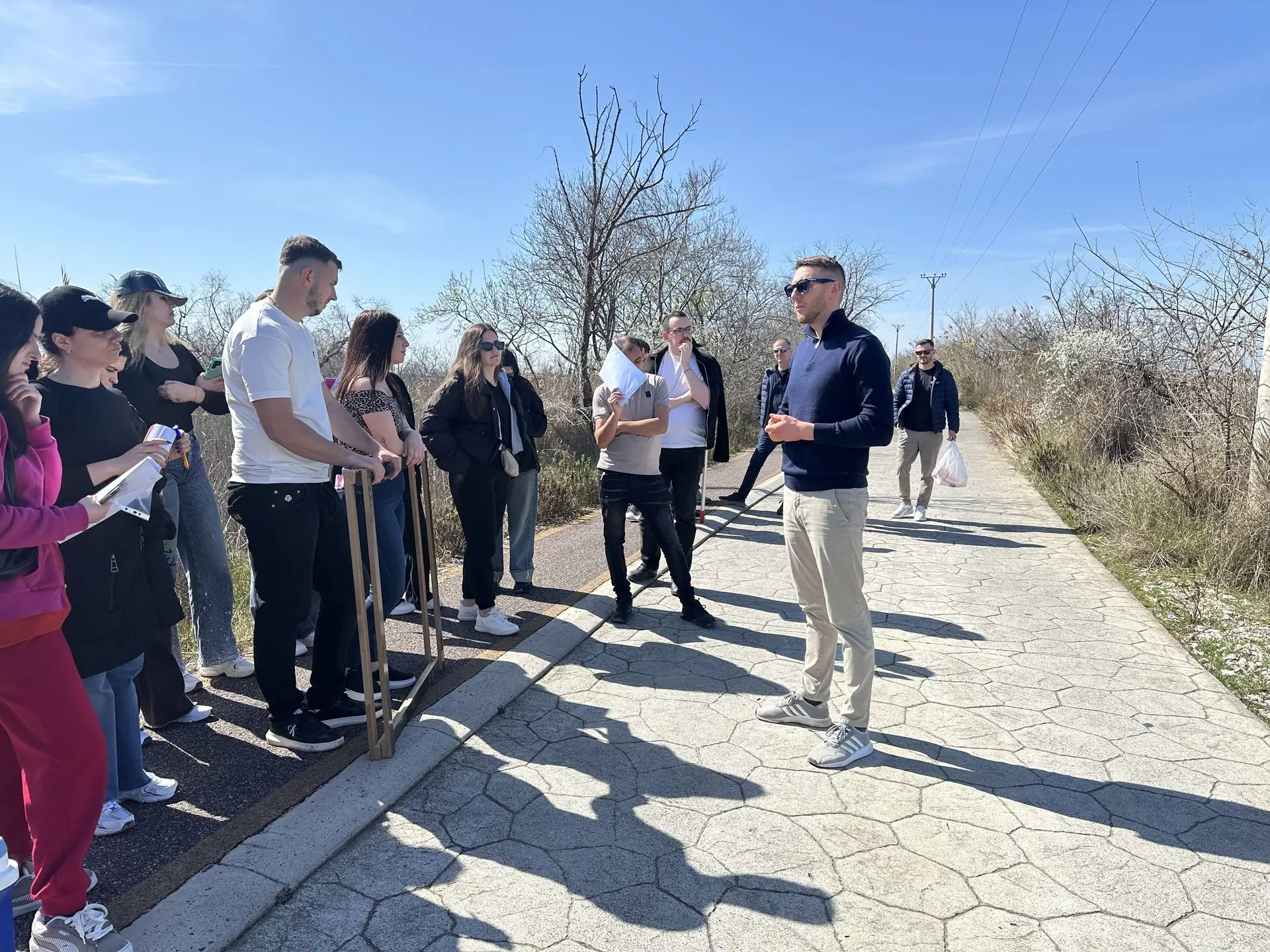
Assessment of biodiversity and environmental pressures through measuring species richness, density, and frequency. Sampling was carried out using quadrat and transect methods in the field. In parallel, water samples were collected and field parameters were measured, analyzing the condition of this important habitat.
III. Lake Shkodra – Assessment of water quality
The practice continued at Lake Shkodra, where students carried out field measurements of water parameters (pH, EC, DO) and collected samples for laboratory analysis, assessing the interaction between natural factors and anthropogenic impacts in this important aquatic ecosystem.
This was the first field practice over the module “Interdisciplinary Project and Excursions.” It represents an essential component in the professional training of students, directly involving them in real processes of environmental monitoring, sampling, and scientific analysis in the field. Through this experience, students strengthen their skills in identifying and assessing environmental issues under real-world conditions.